Deutsch
 English
 Französisch
 Polnisch
WHY CHEMICAL PROTECTION APRONS ARE SO IMPORTANT
Chemical protection aprons protect the body from splashes, contamination and contact with hazardous substances. They are therefore an essential part of personal protective equipment in many sectors, including industry, the chemical sector, cleaning and food processing.But there is more to a chemical-resistant apron than just durable PVC material. Precise workmanship, reliable quality and a well-thought-out design are crucial to ensuring that the apron fulfils its purpose in day-to-day work.
A particular advantage: our GUNOVA chemical-resistant aprons are manufactured directly at our site in Bedburg. This allows us to oversee every stage of production and ensure the highest quality standards.
But how is a GUNOVA chemical-resistant apron actually made?
FROM THE PATTERN TO THE FINISHED APRON
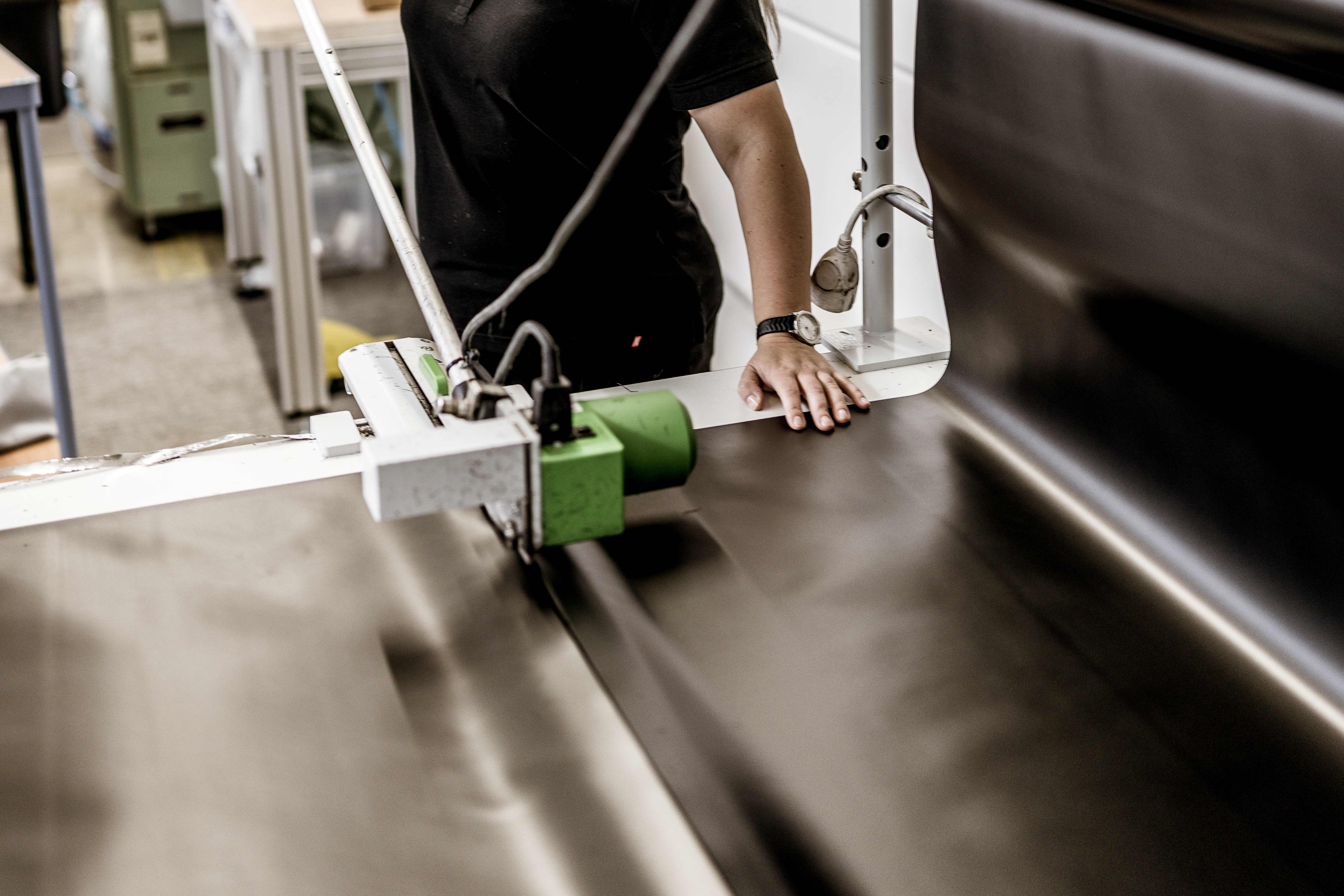
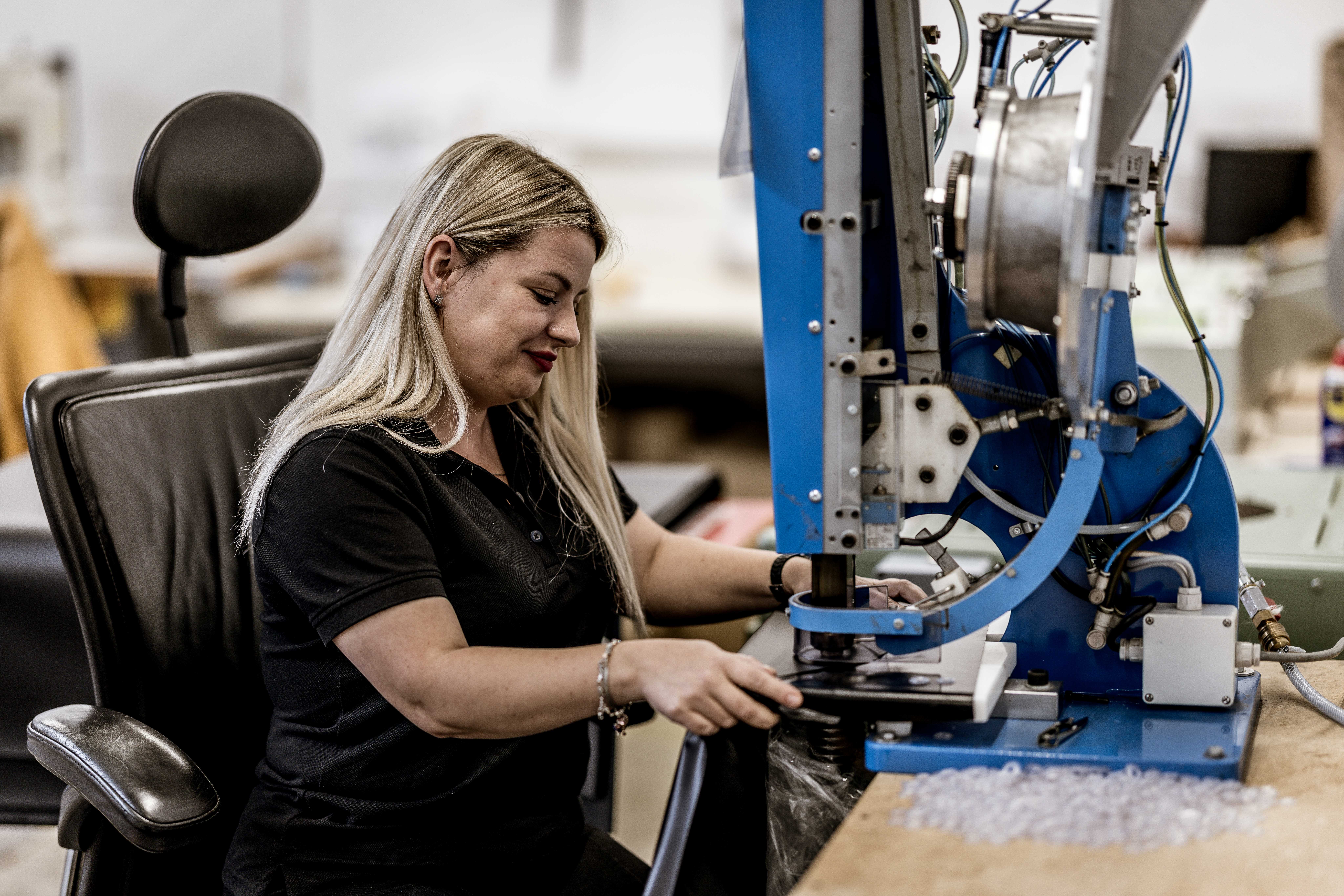
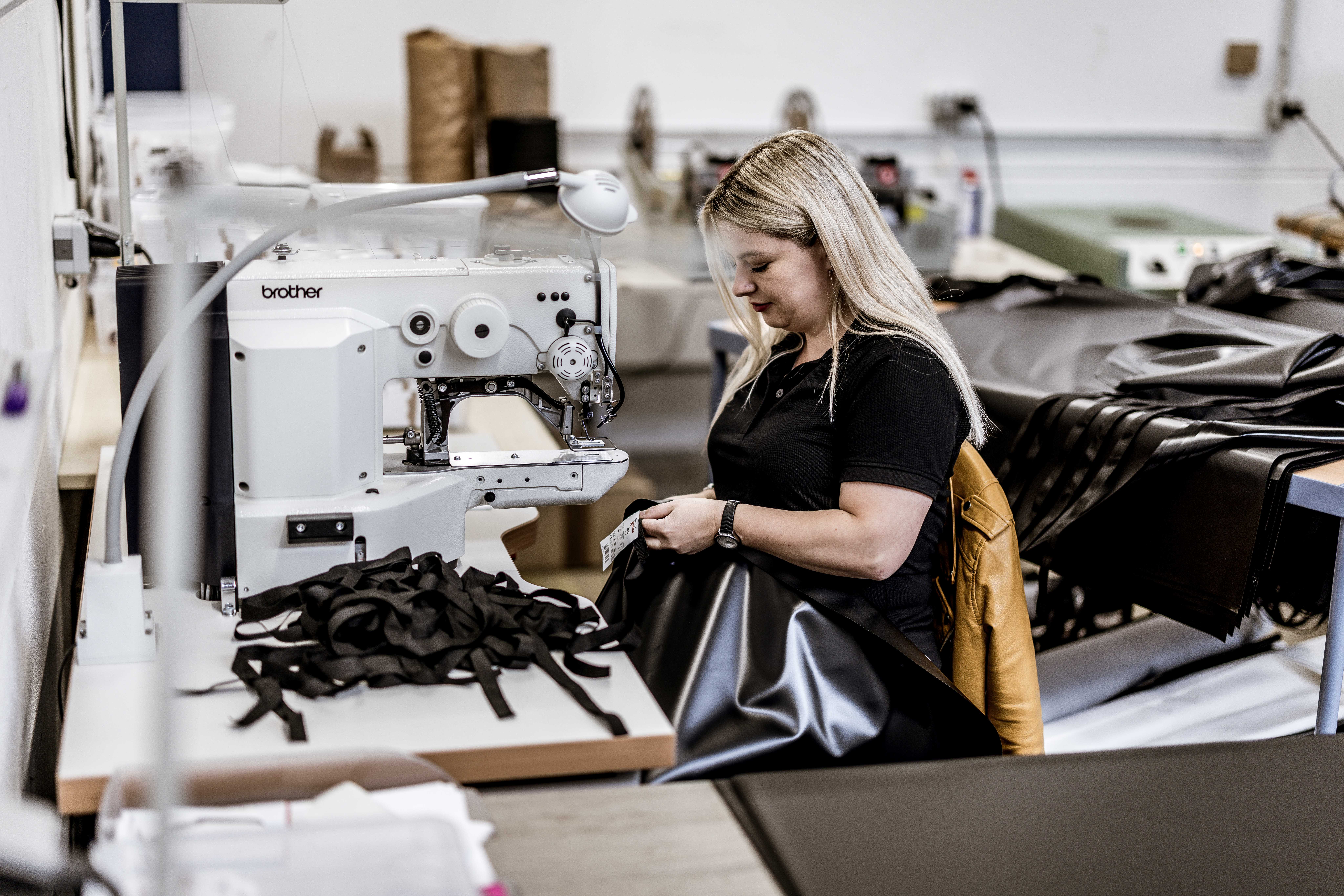
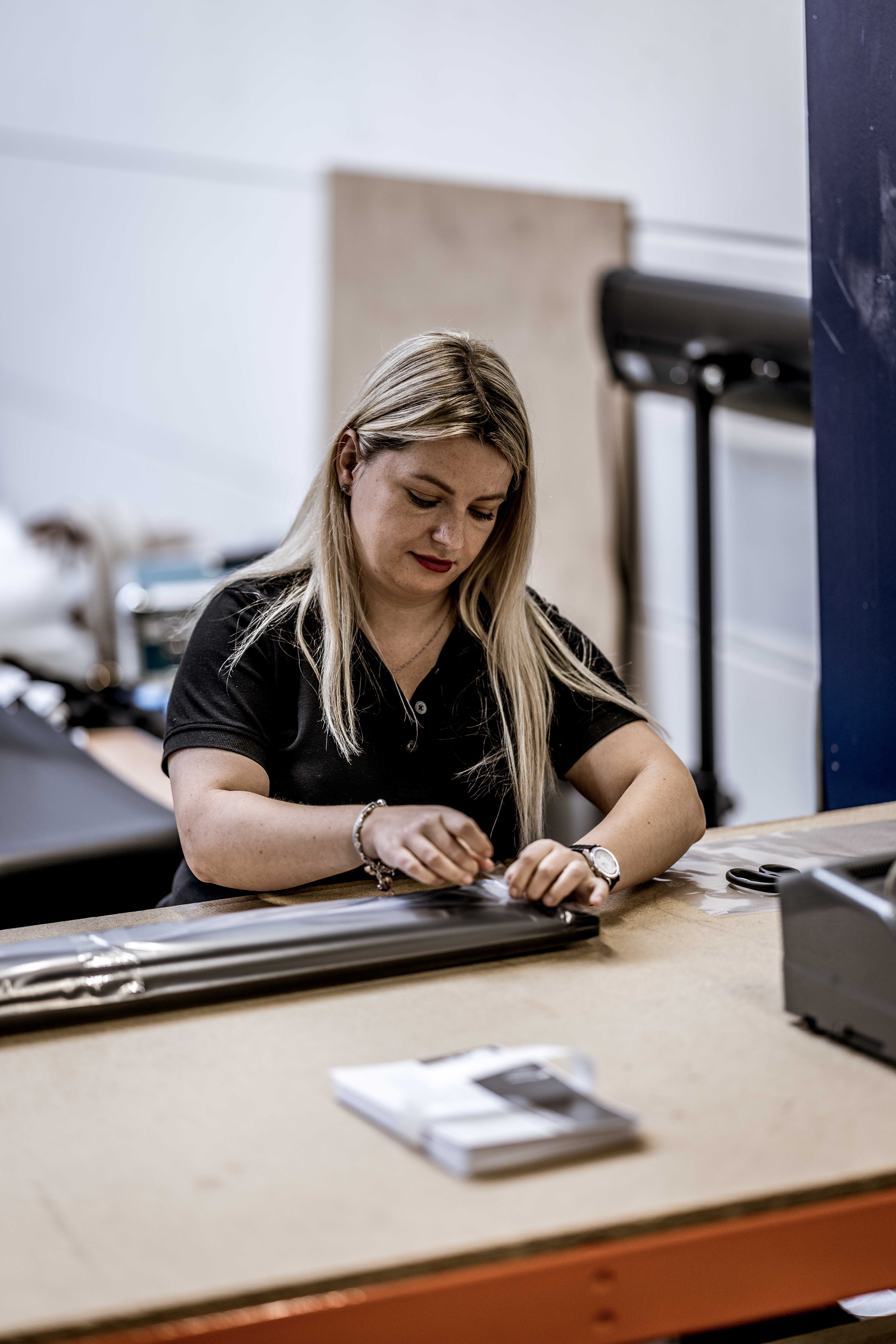
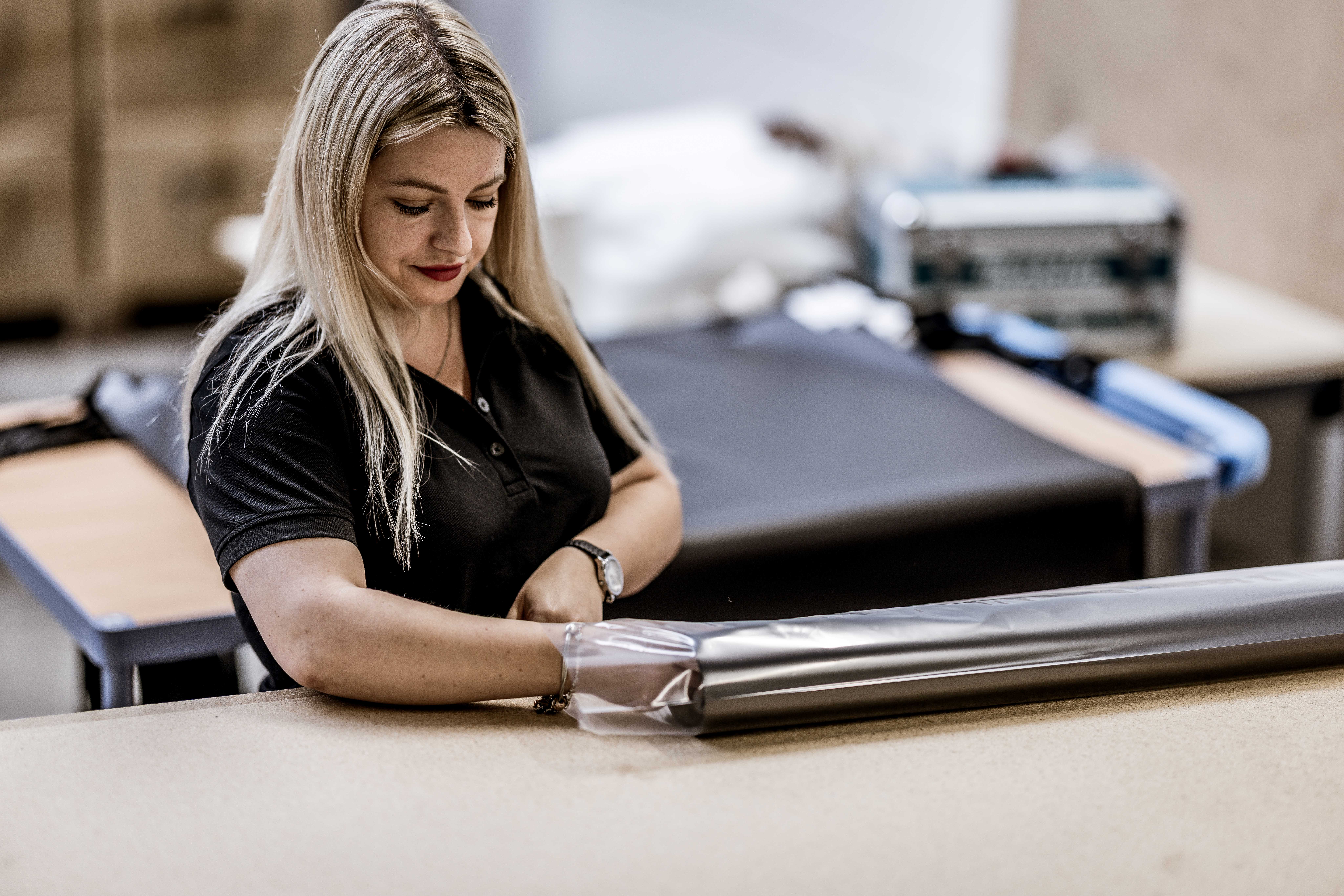
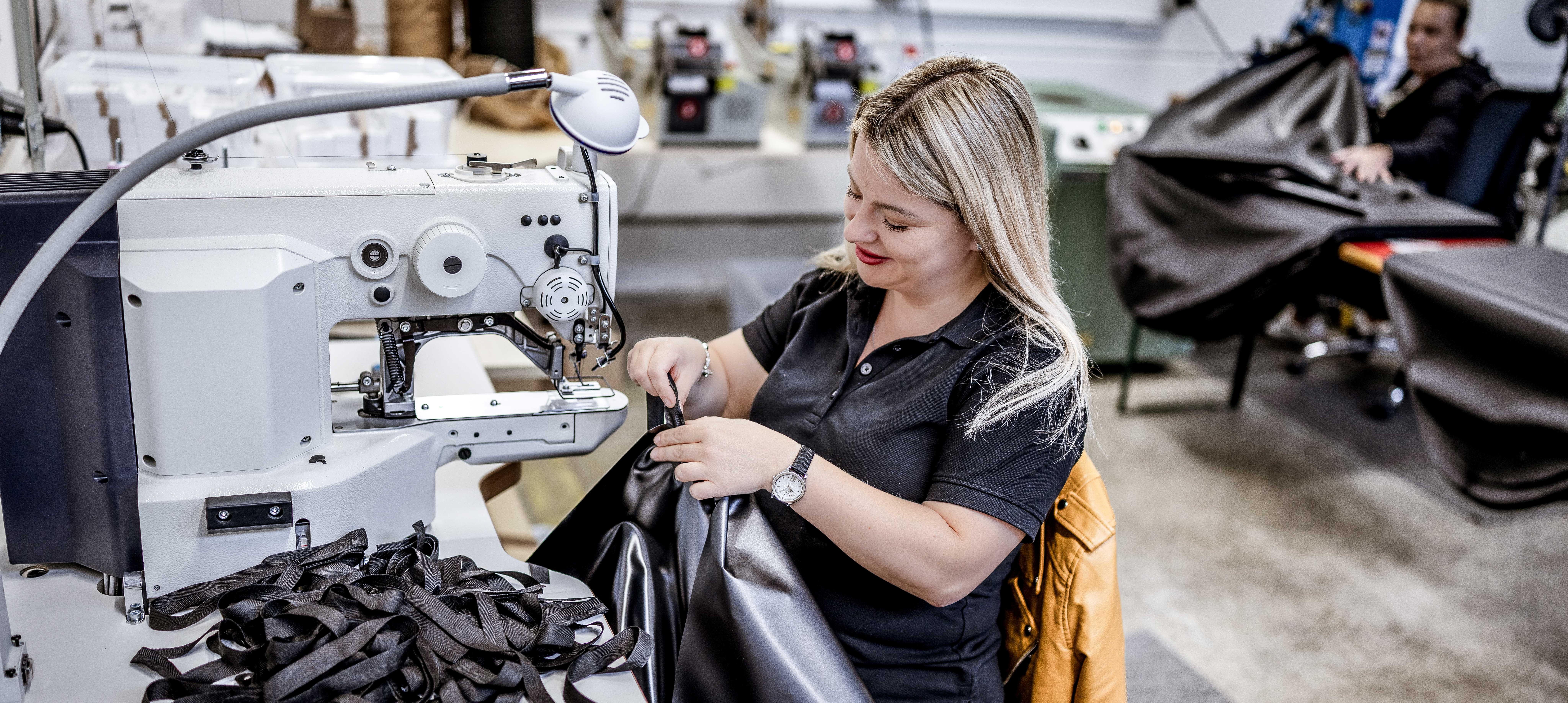
The production of a GUNOVA chemical protection apron begins with a precise pattern. As the aprons are manufactured in various sizes and designs, the material is first cut to size accordingly. The attachment points for the straps are then prepared. A special eyelet machine is used for this, which reinforces the openings with plastic rings, thereby ensuring additional stability and durability.In the next step, the straps are attached using a sewing machine. At the same time, the brand label is affixed. Once production is complete, ten aprons are packed together with a user guide and a product description. Each package is then labelled with the manufacturer’s details, item number and production date. Finally, the finished products are transferred to the warehouse and prepared for dispatch.
The manufacturing process at a glance:
1. Cutting the material to size using the patterns
2. Reinforcing the attachment points with eyelets
3. Sewing on the straps and attaching the brand label
4. Packing sets of ten aprons, including documentation
5. Labelling the packaging with product information
6. Storing the products and preparing them for dispatch
The structured manufacturing process ensures that every apron meets the same high quality standards.
WHERE ARE CHEMICAL-PROTECTION APRONS USED?
GUNOVA chemical-protection aprons are used wherever employees may come into contact with liquids, chemicals or contaminants. They protect clothing and help ensure personal safety during a wide variety of tasks.Typical areas of use:
+ Chemical industry
+ Cleaning and maintenance work
+ Food industry
+ Laboratory environments
+ Waste disposal and recycling facilities
+ Industrial production
WHY WE RELY ON IN-HOUSE MANUFACTURING IN BEDBURG
Our GUNOVA chemical protection aprons are manufactured directly at our site in Bedburg. This allows us to keep a close eye on every stage of production – from cutting the fabric to the final packaging. Short lines of communication, direct coordination and established processes ensure consistently high quality.At the same time, in-house production offers a high degree of flexibility. Changes can be implemented quickly and production processes continuously optimised. The result is chemical protection aprons that meet our quality standards and are reliably prepared for professional use.
WELL-THOUGHT-OUT MANUFACTURING FOR PROFESSIONAL USE
Behind every GUNOVA chemical protection apron lies a structured manufacturing process – from the initial cutting pattern right through to the fully packaged apron. Manufacturing at our site in Bedburg enables us to oversee every stage of the process directly and ensure high quality standards.The result is chemical-protective aprons that are carefully crafted, reliably packaged and prepared for professional use. In this way, we combine regional manufacturing, well-established processes and many years of experience to create a solution that our customers can rely on in their day-to-day work.