Deutsch
 English
 Französisch
 Polnisch
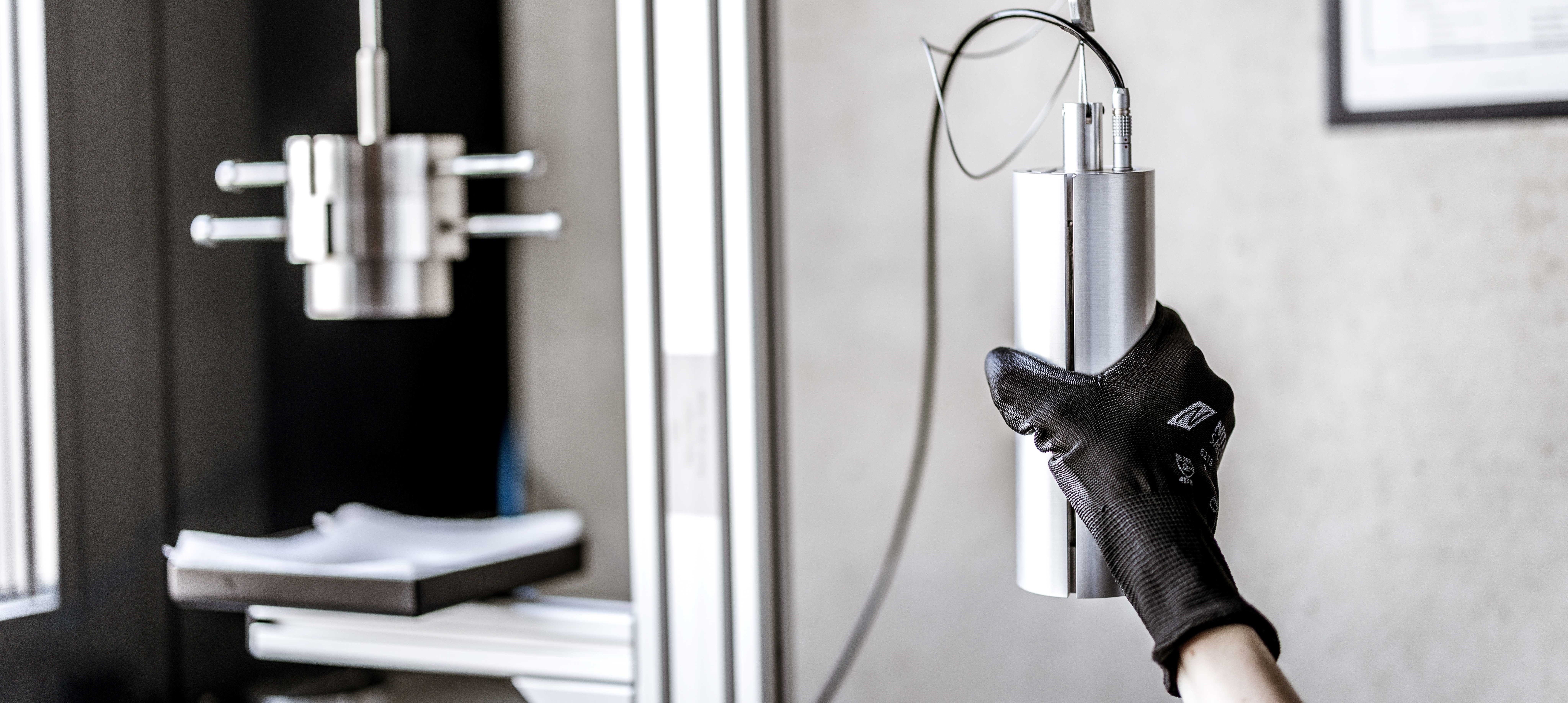
WHY GRIP TESTING IS SO IMPORTANT FOR PROTECTIVE GLOVES
In day-to-day work, protective gloves must do far more than simply provide protection. It is also crucial how securely tools, materials or components can be held – particularly on smooth, damp or oily surfaces. This is precisely where grip strength plays a key role.After all, a lack of grip can quickly become a safety hazard: tools slip, components fall out of hand, or tasks cannot be carried out with precision. At the same time, the protective function of the glove must not be compromised.
That is why the grip strength of protective gloves is specifically tested in the laboratory. But how does such a grip test actually work – and why is it so important when selecting protective gloves?
WHAT THE GRIP TEST MEASURES
The grip test assesses how well a protective glove can grasp, hold and control objects. It involves testing different materials and coatings under realistic conditionsTests are carried out, amongst other things, on:
+ Dry surfaces
+ Damp conditions
+ Oily or slippery materials
The focus is on the force required to hold or move an object securely. The better the glove’s grip, the more safely and with greater control tasks can be carried out.
HOW A GRIP TEST IS CONDUCTED IN THE LABORATORY
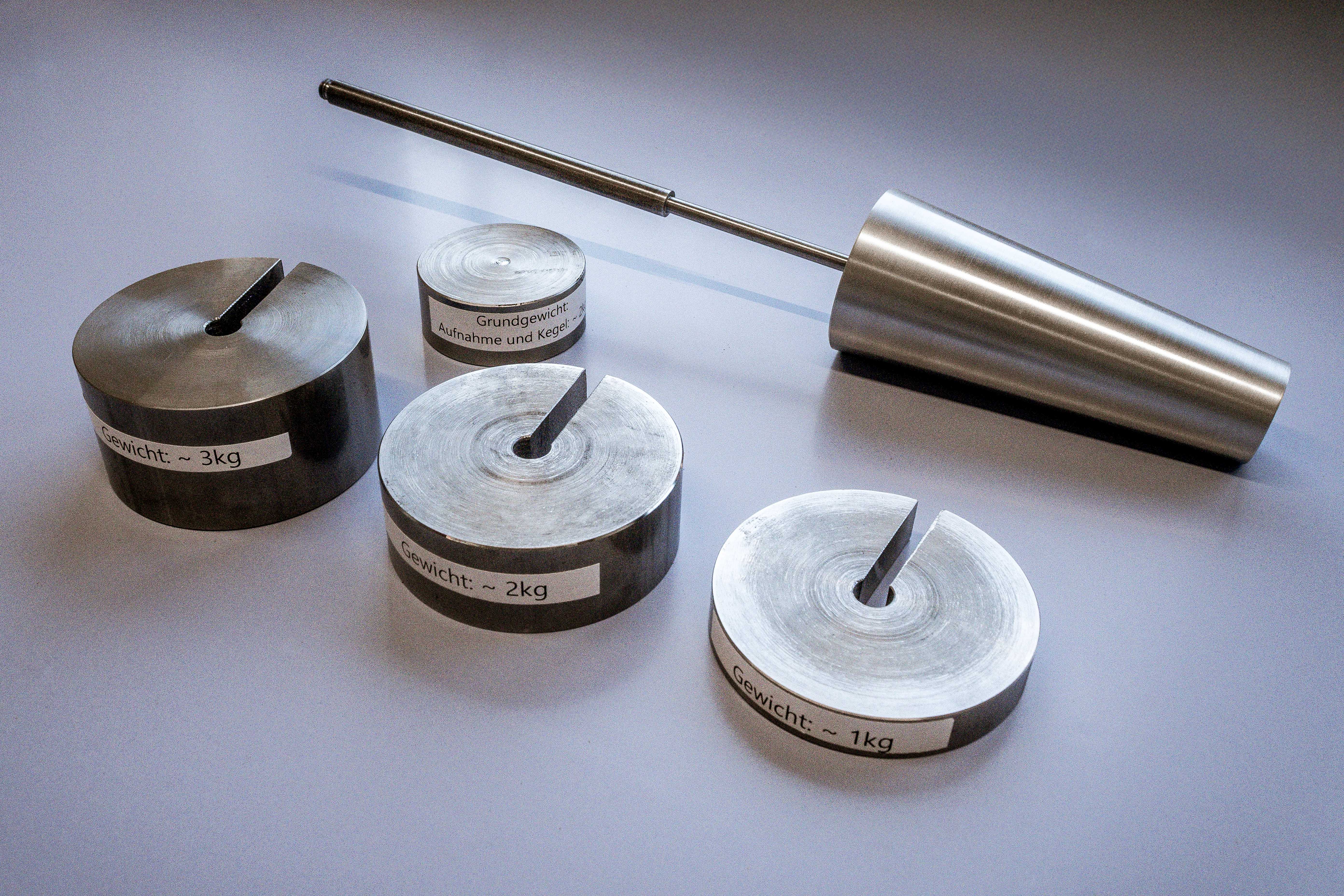
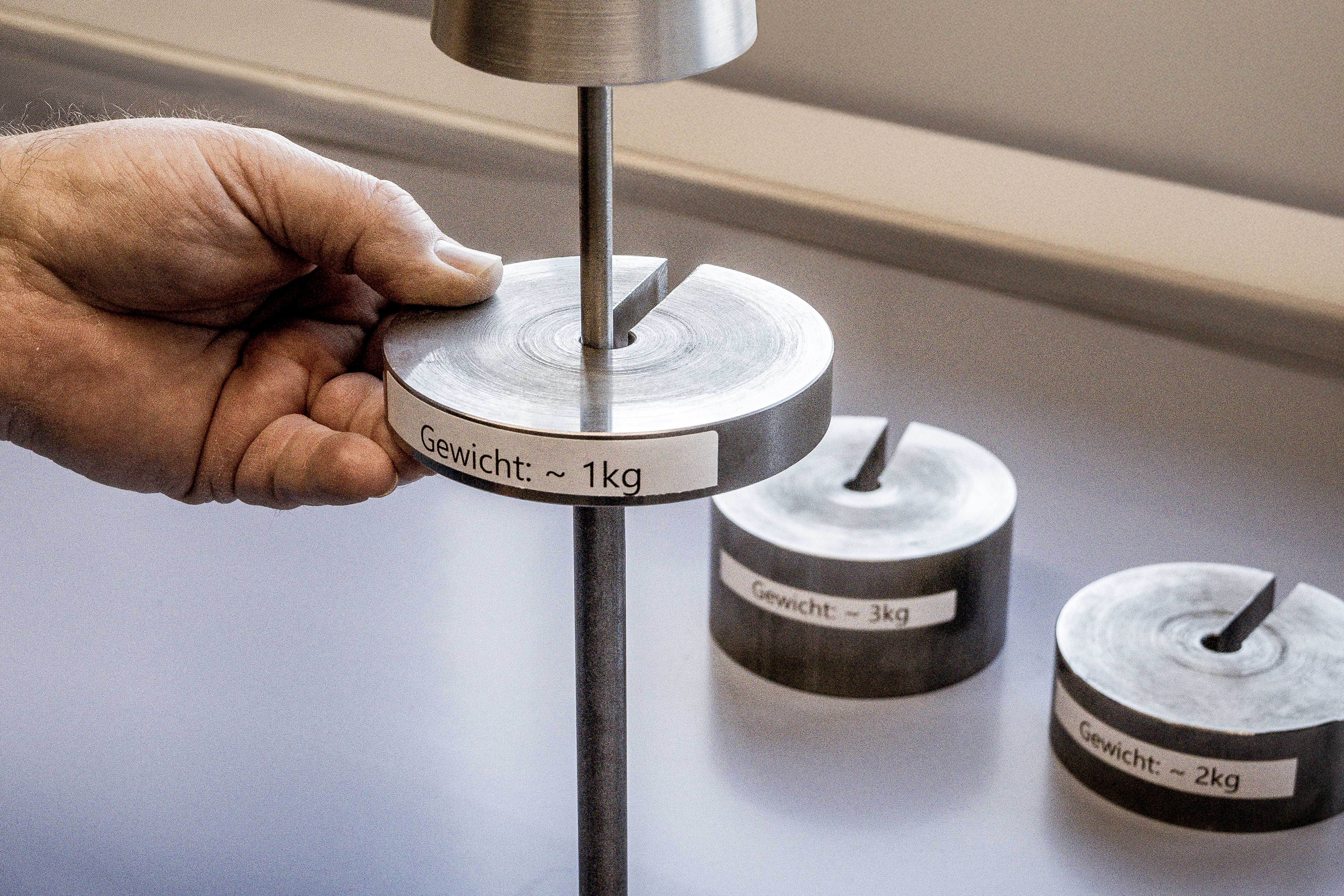
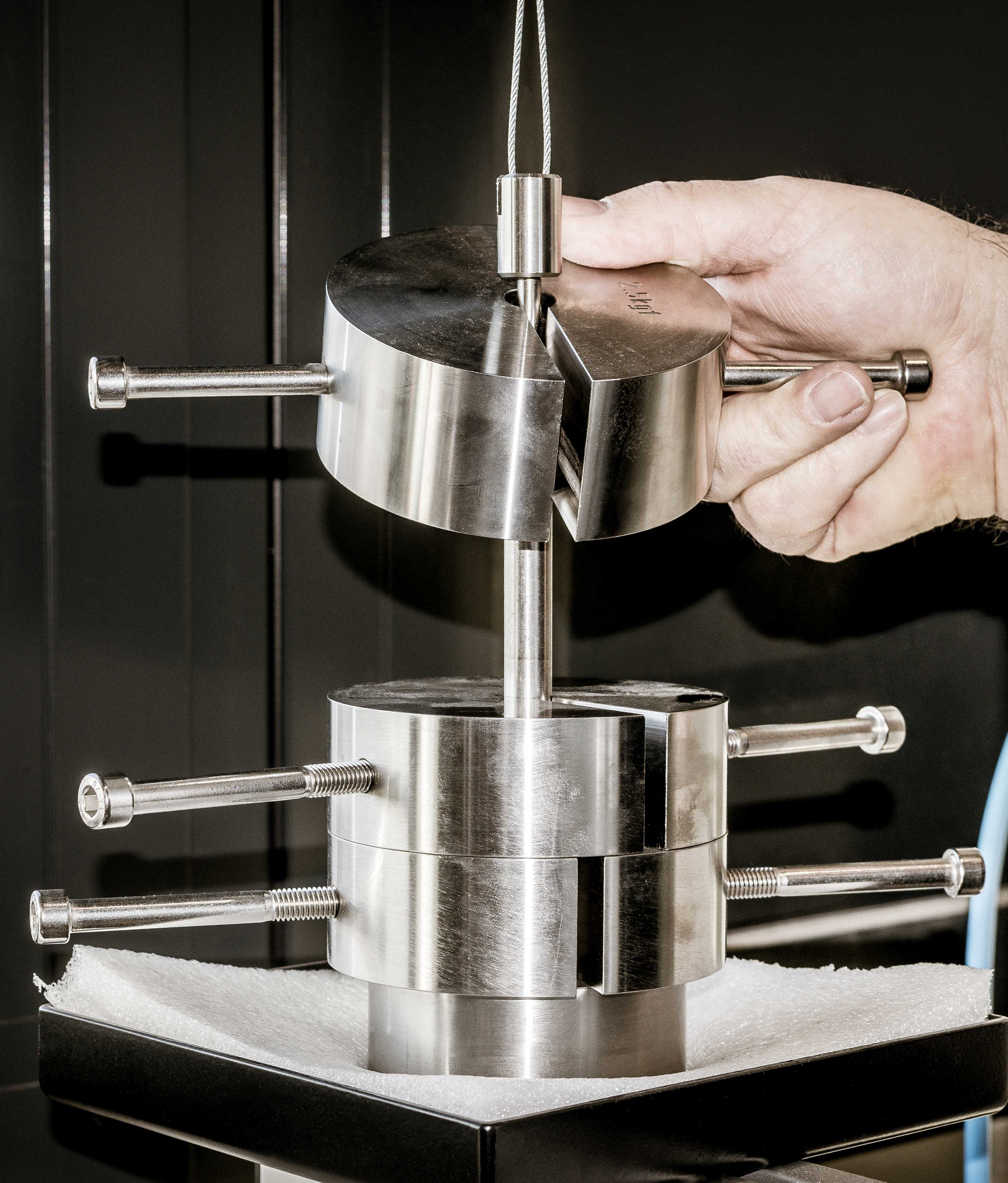
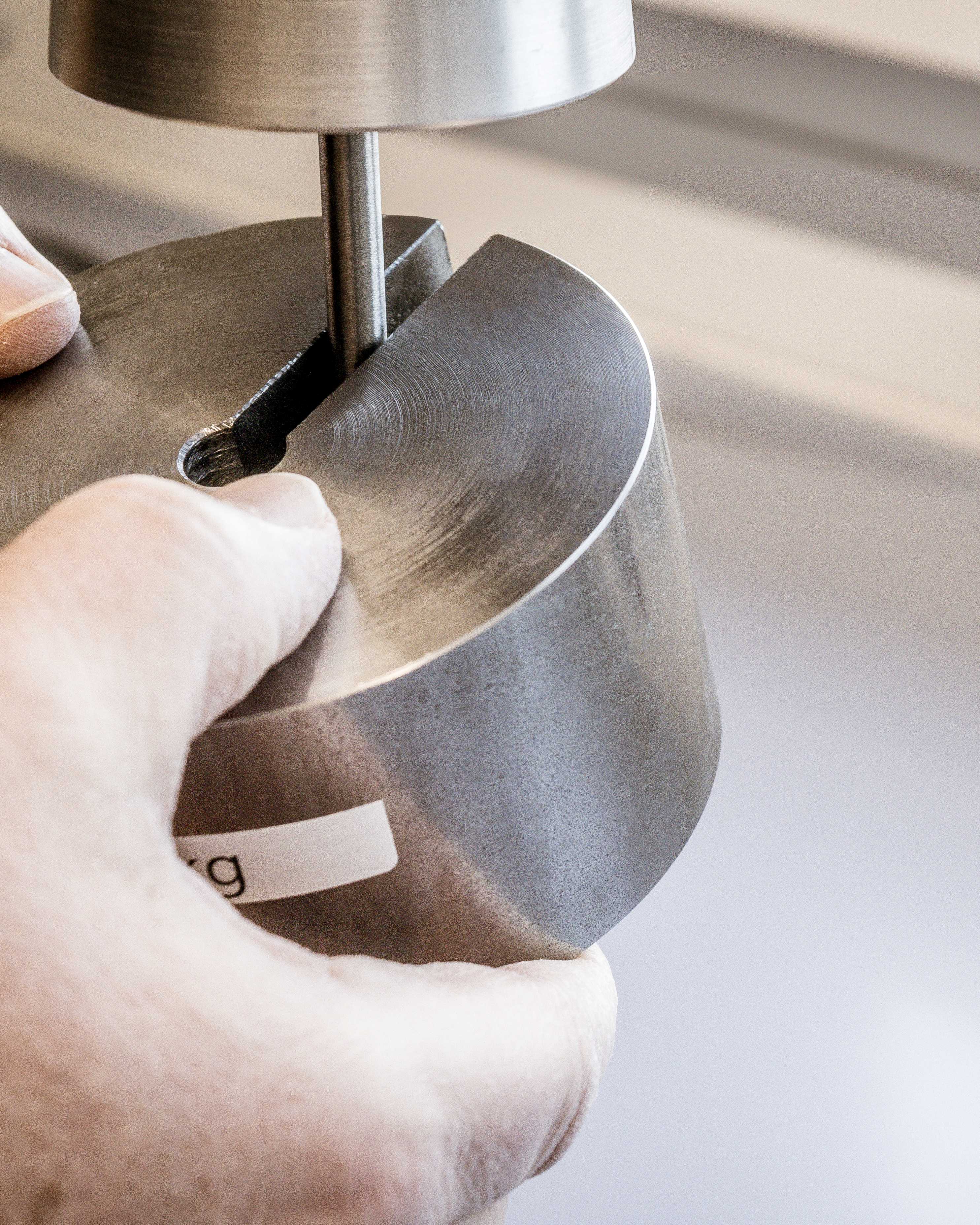
At the AS Quality Center, standardised test procedures are used to objectively assess the grip strength of protective gloves. This makes it possible to determine how different materials and coatings perform under realistic conditions.A typical test setup works as follows:
+ A cone-shaped test object is secured to a fixture
+ The object is loaded with defined weights
+ The surface can also be wetted with liquids such as oil to simulate realistic conditions
+ The test then assesses how securely the glove can hold the object
In addition, measurement systems are used to precisely record the actual force required for gripping and holding. Here too, the test objects are deliberately moistened with oil or other liquids to simulate realistic working conditions. All measurement results are then documented and evaluated, enabling an objective comparison of the grip reliability of different gloves.
The results help to:
+ Compare the grip reliability of different gloves
+ Select suitable gloves for specific applications
+ Improve safety and control in everyday working life
WHY GOOD GRIP IS A SAFETY FACTOR
In many workplaces, the importance of grip is underestimated. Yet working safely often depends directly on the grip provided by the glove.Typical problems caused by insufficient grip:
+ Tools or materials slipping out of hand
+ Unsafe working conditions in the presence of oil or moisture
+ Increased physical effort and faster fatigue
+ Reduced precision during assembly or precision work
Therefore, a protective glove should not only protect, but also enable control, dexterity and a secure grip.
UNDERSTANDING GRIP – WORKING SAFELY
Grip is a crucial feature of modern protective gloves. Only when materials and coatings provide sufficient grip, even under difficult conditions, can work be carried out safely and efficiently.Grip tests help to objectively assess the practical suitability of gloves and develop suitable solutions for different work environments.
Because ultimately, good protection begins where safety and control come together.