Deutsch
 English
 Französisch
 Polnisch
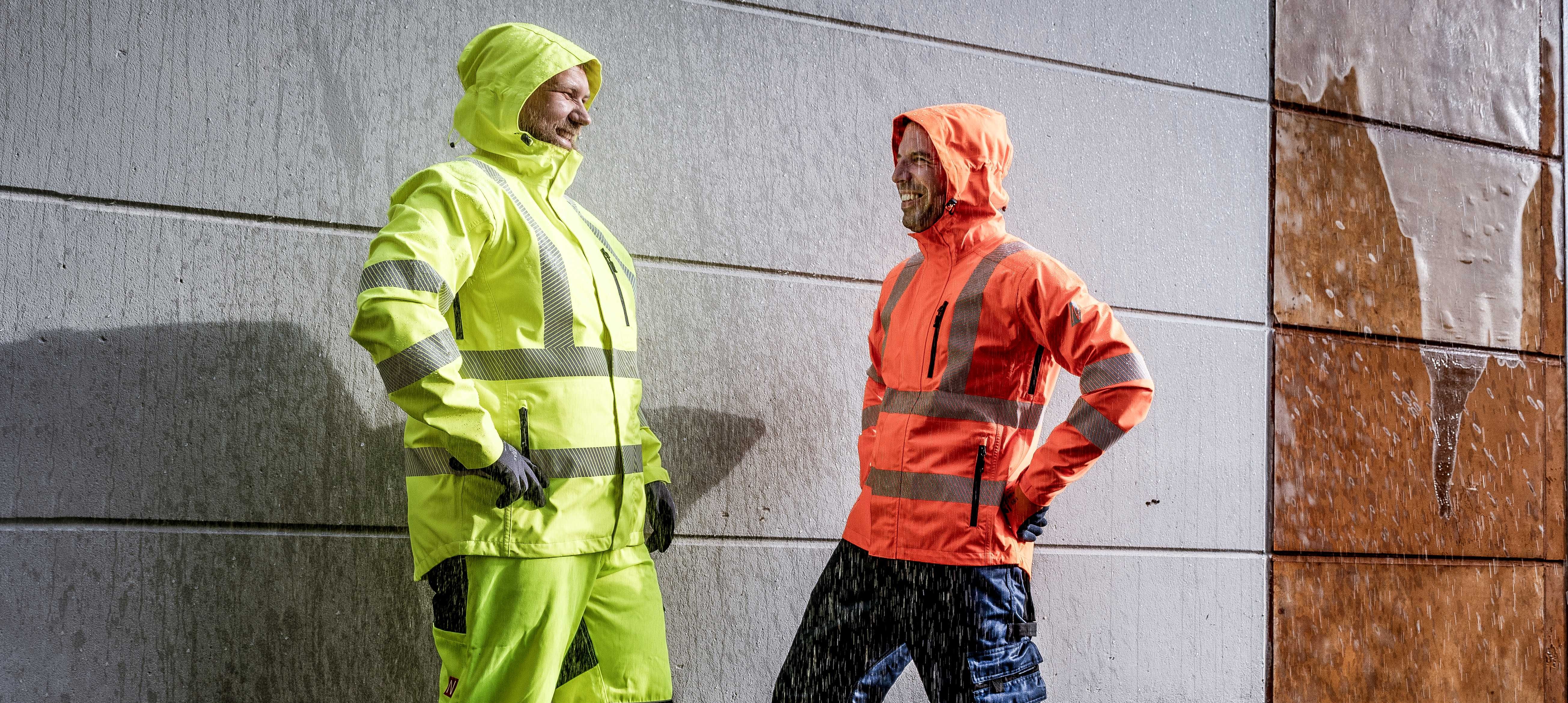
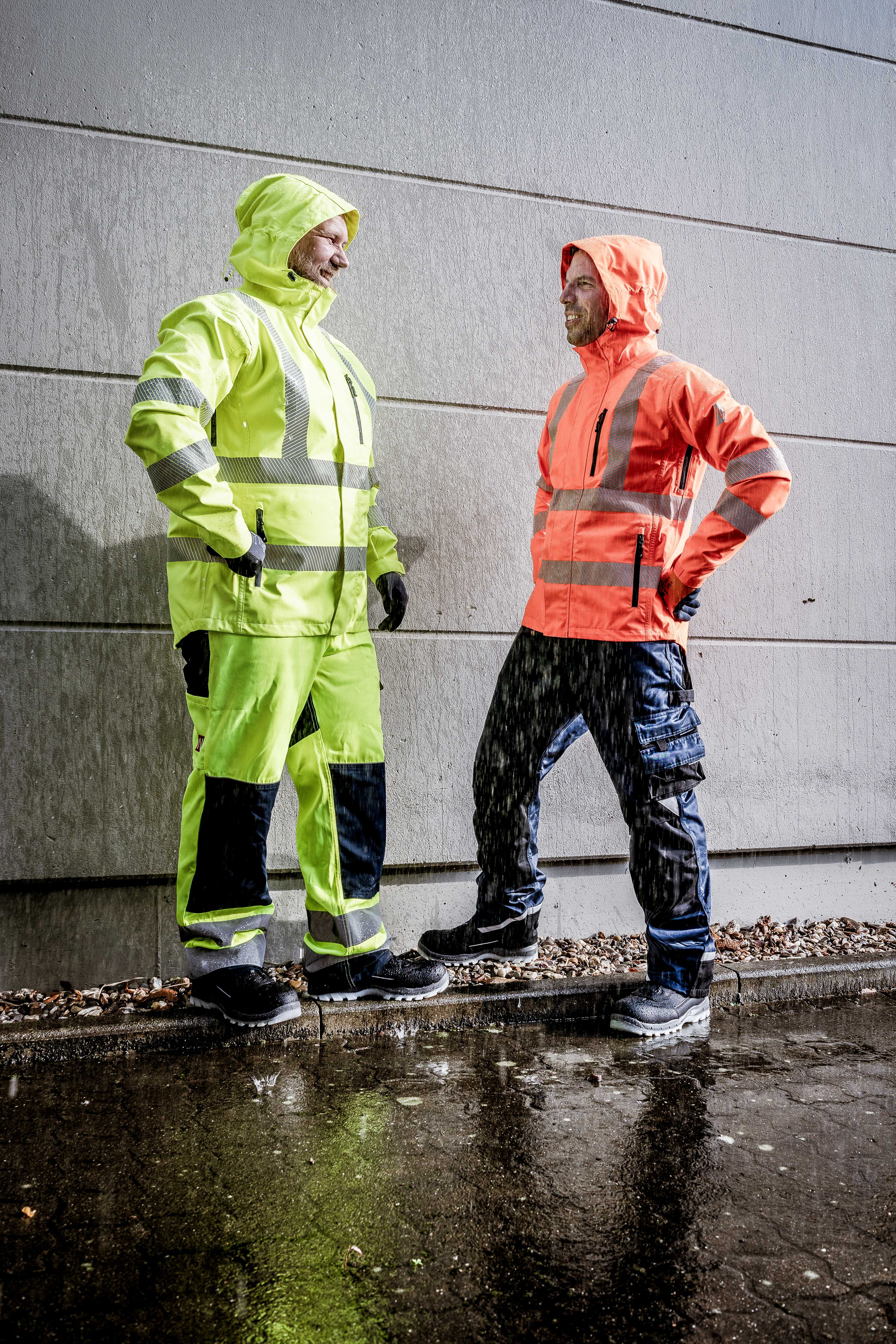
WHEN RAIN IS PART OF THE WORKING DAY
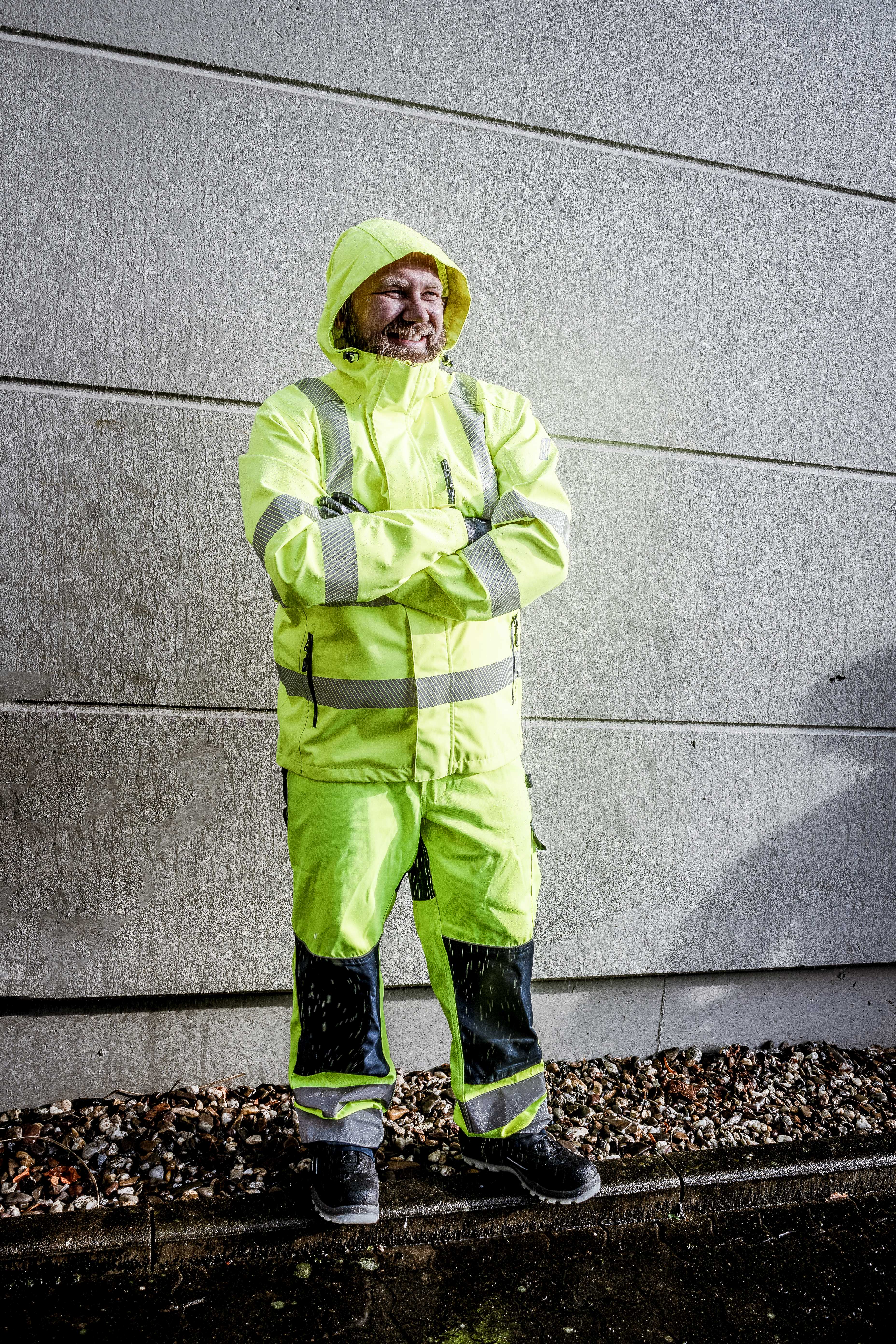
Rain, wind and changeable weather conditions place particular demands on workwear. Anyone who regularly works outdoors needs clothing that provides reliable protection against wet weather while remaining comfortable to wear. After all, it is not only water penetrating the clothing that can cause discomfort – moisture building up inside can also affect wearing comfort.This is where EN 343 comes in. The European standard specifies requirements for protective clothing against rain and assesses, among other things, resistance to water penetration and the material's water vapour resistance. The marking indicates the performance levels achieved by a garment in the relevant tests.
But what do the different EN 343 performance classes mean, how do waterproofness and breathability differ, and what should you consider when choosing suitable rainwear?
WHAT DOES EN 343 MEAN?
EN 343 specifies the requirements for protective clothing designed to provide protection against precipitation, such as rain and snow, as well as fog and ground moisture. Various properties are tested to assess the protective performance of the clothing under defined conditions.The EN 343 marking consists of a pictogram and up to three indications. The first two indicate the performance classes achieved, while the third provides information about an additional test.
The marking at a glance:
| Position | Marking | Meaning |
| 1 | Class 1-4 | Resistance to water penetration: Indicates how effectively the material resists water penetration. |
| 2 | Class 1-4 | Water vapour resistance: Indicates how easily water vapour can pass through the material to the outside. |
| 3 | R or X | Rain tower test: R means that the additional rain tower test has been passed. X means that the test has not been carried out. |
The first two indications are each divided into classes 1 to 4, with class 4 representing the highest performance level for the respective property.
Rain tower test (R or X): In this additional test, the finished garment is exposed to artificial rain to assess its waterproofness under defined conditions. An R indicates that the test has been passed, while an X means that this optional test has not been carried out.
Important: The EN 343 marking allows the tested properties to be compared. However, it does not mean that every garment provides the same level of protection under all weather and working conditions.
WATERPROOFNESS AND BREATHABILITY – WHAT IS THE DIFFERENCE?
An important feature of EN 343 is that it assesses two different properties of protective clothing. A high resistance to water penetration does not automatically indicate how effectively moisture can escape from inside the clothing.1. Resistance to water penetration – protection against moisture entering
Resistance to water penetration describes how effectively the material prevents water from penetrating. The test is carried out under defined water pressure. The higher the class achieved, the greater the tested resistance to water penetration.
However, it is not only the properties of the outer material that matter. Seams and garment construction are also important, as moisture can enter through areas such as joins and seams.
2. Water vapour resistance – allowing moisture to escape
Physical activity generates heat and perspiration during work. To help prevent moisture from building up unnecessarily inside the clothing, water vapour resistance is an important selection criterion.
It describes the resistance a material offers to the passage of water vapour. The lower this resistance, the more easily water vapour can pass through the material. Under EN 343, class 4 represents the most favourable performance level.
What does this mean when choosing rainwear?
+ During prolonged rainfall: High resistance to water penetration is particularly important.
+ During physically demanding activities: Low water vapour resistance can help improve wearing comfort.
+ In changeable weather conditions: Both properties should be considered together.
Suitable rainwear should therefore not be selected solely on the basis of the highest waterproofness class. What matters most is how well the properties match the intended application.
MORE THAN JUST WATERPROOF
EN 343 provides valuable guidance when selecting suitable protective clothing against rain. By dividing performance into different classes, resistance to water penetration and water vapour resistance can be assessed and compared.However, the markings should always be considered in relation to the actual requirements. Alongside protection against wet weather, factors such as freedom of movement, fit and compatibility with other protective clothing may also play an important role.
The combination of weather protection and wearing comfort is essential. After all, suitable rainwear should not only prevent water from penetrating but also remain as comfortable as possible during extended periods of use and changing levels of physical activity.