Deutsch
 English
 Französisch
 Polnisch
WHY THE TDM TEST MATTERS
Cut-resistant gloves help protect hands from sharp edges, knives and sheet metal. But how do you know how cut-resistant a glove really is? That's exactly what the TDM test according to EN 388 is designed to determine. It is one of the most important test methods for cut protection and provides highly reliable results – particularly for modern high-performance fibres.At the AS Quality Center, our in-house testing laboratory, we also perform the TDM test. This enables us to assess the cut resistance of our gloves under standardised conditions and incorporate the results directly into product development.
But how does the TDM test actually work, why is it considered so accurate, and how does it differ from the Coupe Test?
HOW THE TDM TEST WORKS
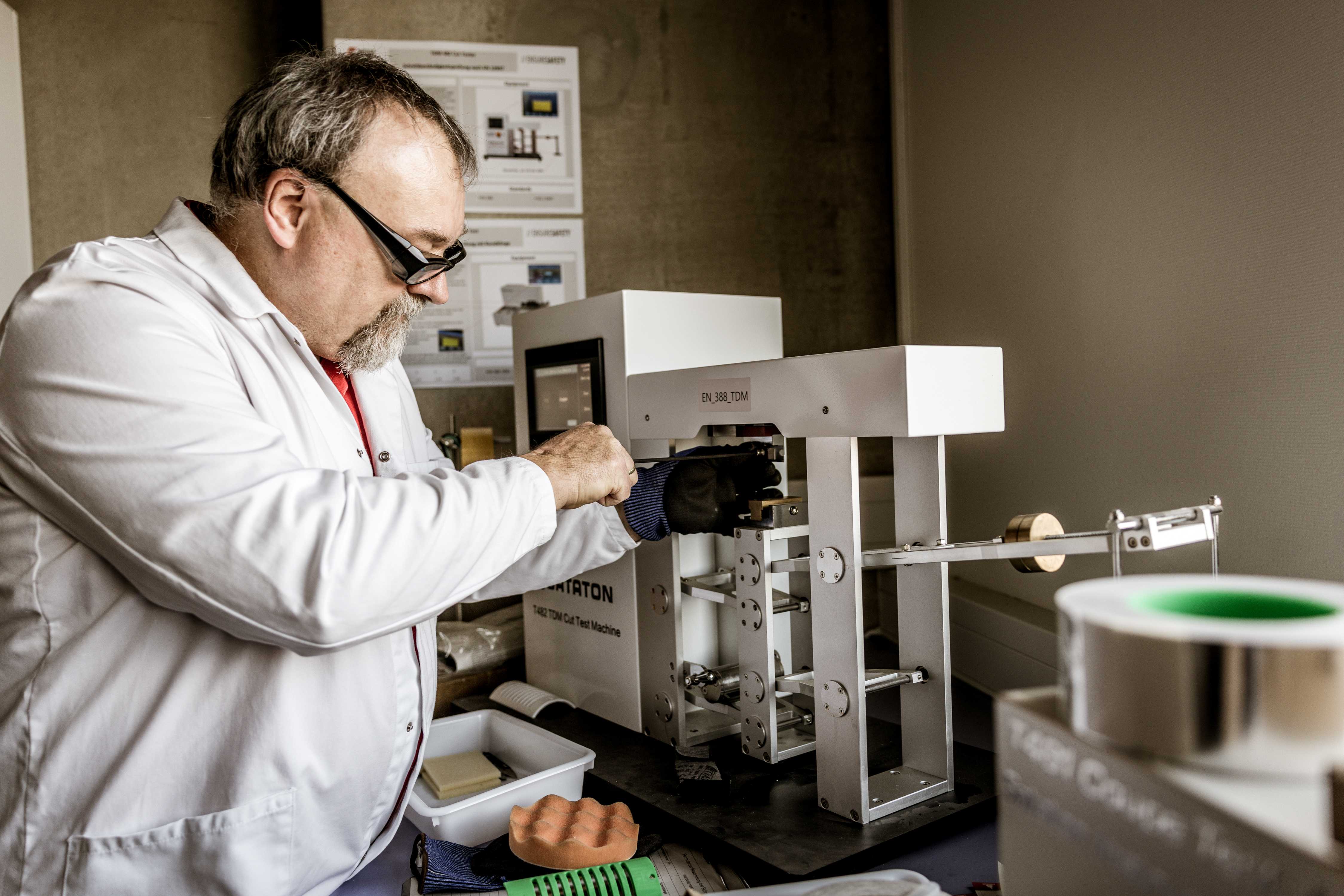
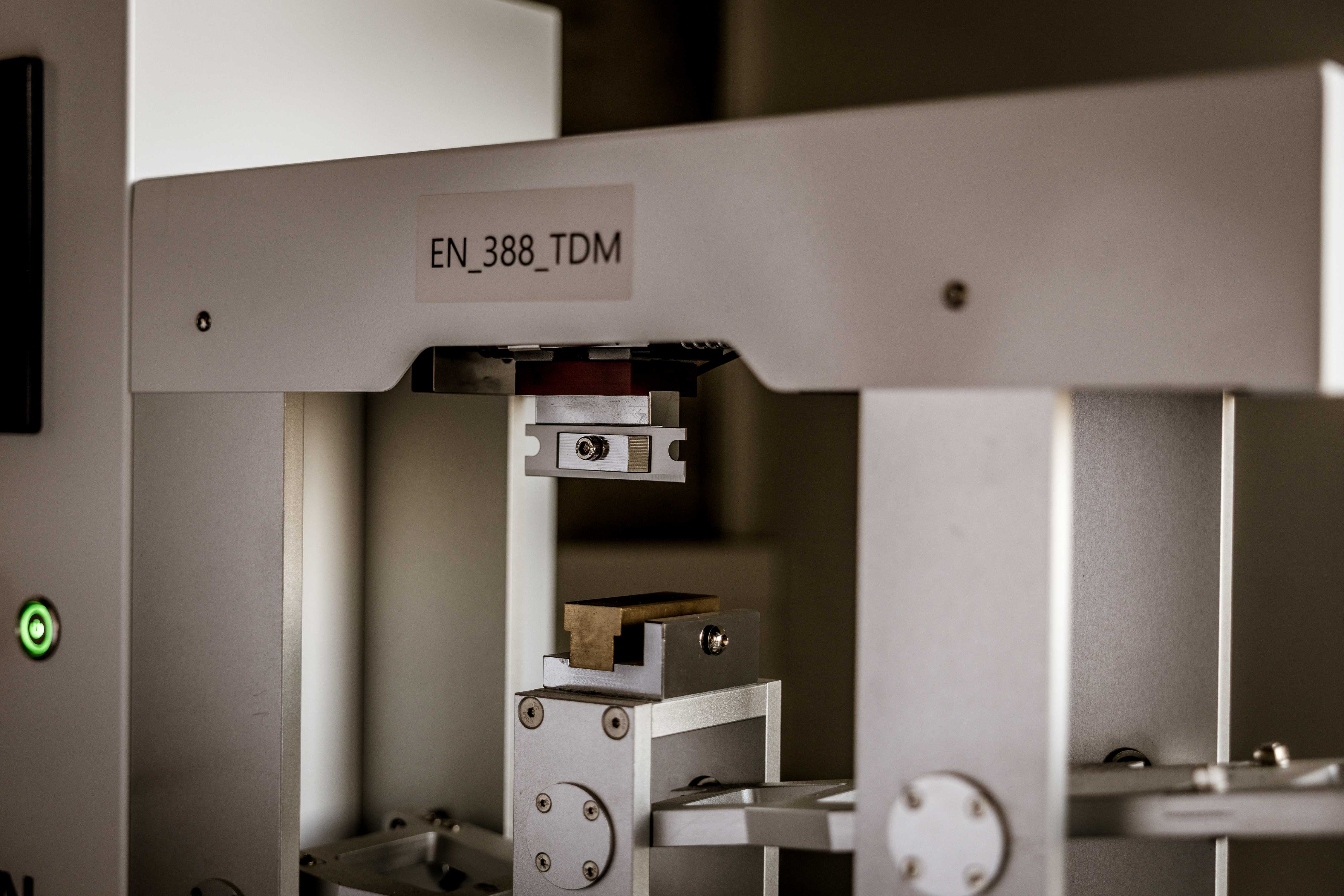
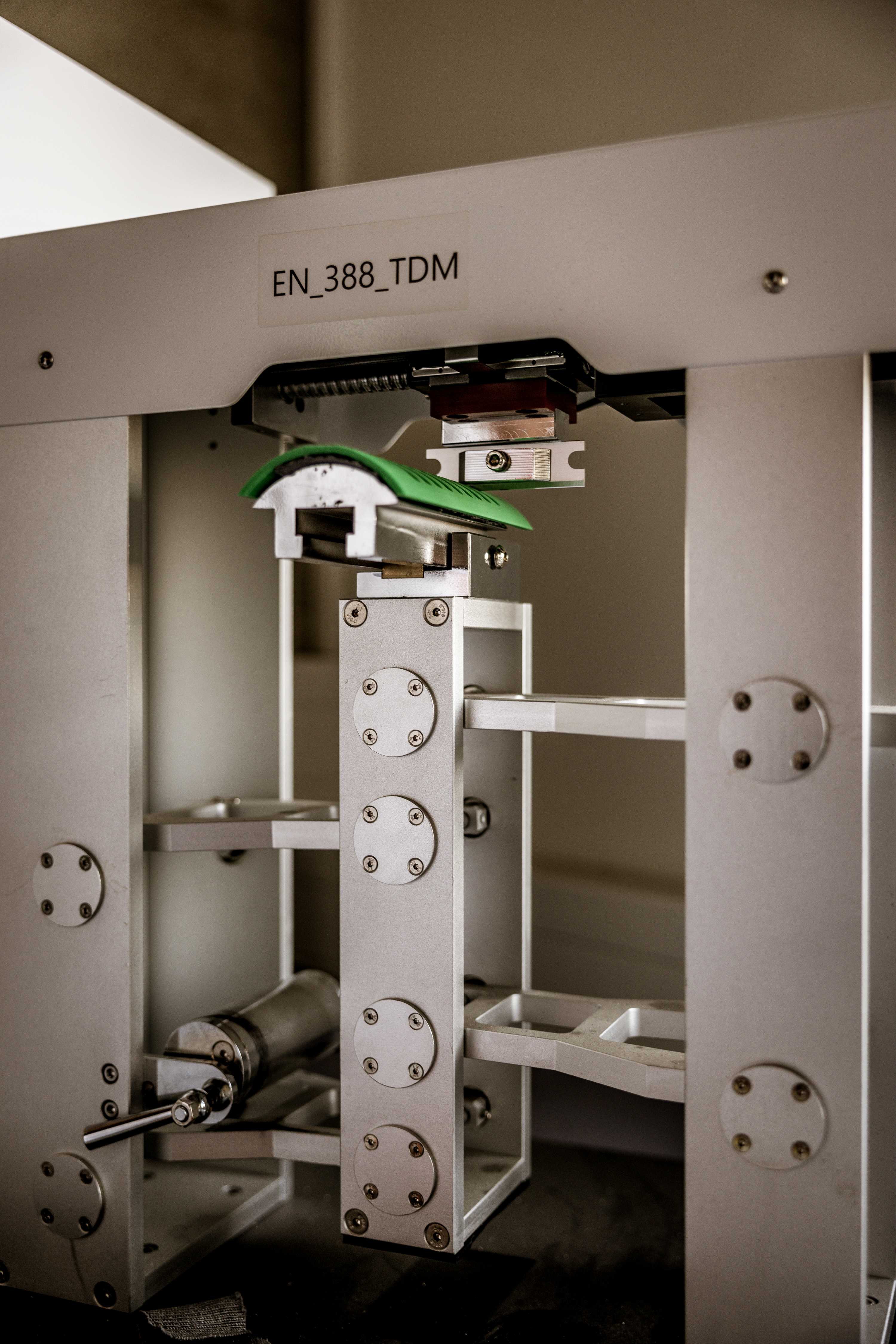
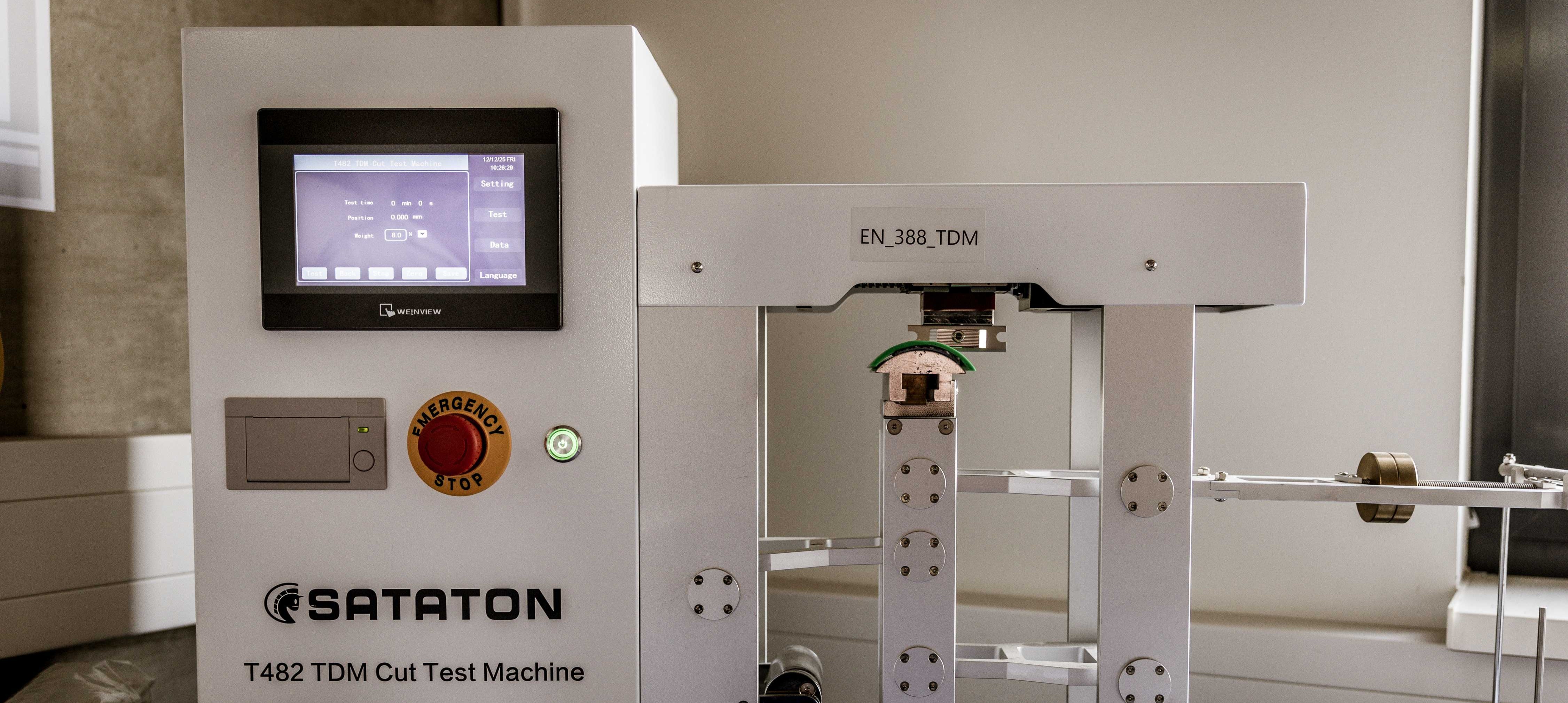
At the AS Quality Center, the cut resistance of protective gloves is tested using a modern TDM testing machine in accordance with EN 388. During the test, a straight blade moves across the glove material at a defined speed. The applied force is gradually increased until the blade cuts completely through the material.To ensure the highest possible level of accuracy, a new, sharp blade is used for every single cut. Multiple cuts are carried out using different force levels, with all measurements carefully recorded and analysed to determine the material's actual cut resistance. The results are then used to assign the appropriate cut protection level from A to F according to EN 388.
By carrying out these tests in our own laboratory, we can evaluate products more quickly, identify opportunities for improvement at an early stage and continuously maintain our high quality standards. The test results also feed directly into the ongoing development of our cut-resistant gloves.
TDM TEST OR COUPE TEST – WHAT'S THE DIFFERENCE?
Both the Coupe Test and the TDM Test are used to determine the cut resistance of protective gloves in accordance with EN 388. However, the two methods differ significantly in the way they are performed.In the Coupe Test, a rotating circular blade repeatedly passes over the glove material under constant pressure. The number of blade rotations required to cut through the material is then compared with a reference material. This method is particularly suitable for materials with low to medium cut resistance.
However, modern high-performance fibres can quickly blunt the blade. This may cause the Coupe Test to overestimate the glove's actual protective performance. In such cases, EN 388 specifies the TDM Test as the reference test method.
The TDM Test, by contrast, uses a new, sharp blade for every individual cut. In addition, the cutting force is gradually increased until the material is cut through. This provides significantly more accurate results and forms the basis for the EN 388 cut protection levels A to F.
The differences at a glance:
| Coupe-Test | TDM-Test |
| Rotating circular blade | Straight blade |
| One blade used for multiple cuts | New blade for every cut |
| Blade can become blunt | No influence from blade wear |
| Suitable for basic materials | Ideal for modern high-performance fibres |
| Result expressed as a Coup Index | Result expressed as cutting force (Levels A–F) |
WHY THE TDM TEST IS ESSENTIAL
The TDM Test delivers precise and repeatable results for assessing the cut resistance of modern protective gloves. Particularly when testing high-performance cut-resistant materials, it is now regarded as the most reliable test method under EN 388.At the AS Quality Center, our in-house testing ensures that our products meet the demanding requirements of everyday working environments while supporting the continuous improvement of our cut-resistant glove range.