Deutsch
 English
 Französisch
 Polnisch
HOW DURABLE IS A PROTECTIVE GLOVE REALLY?
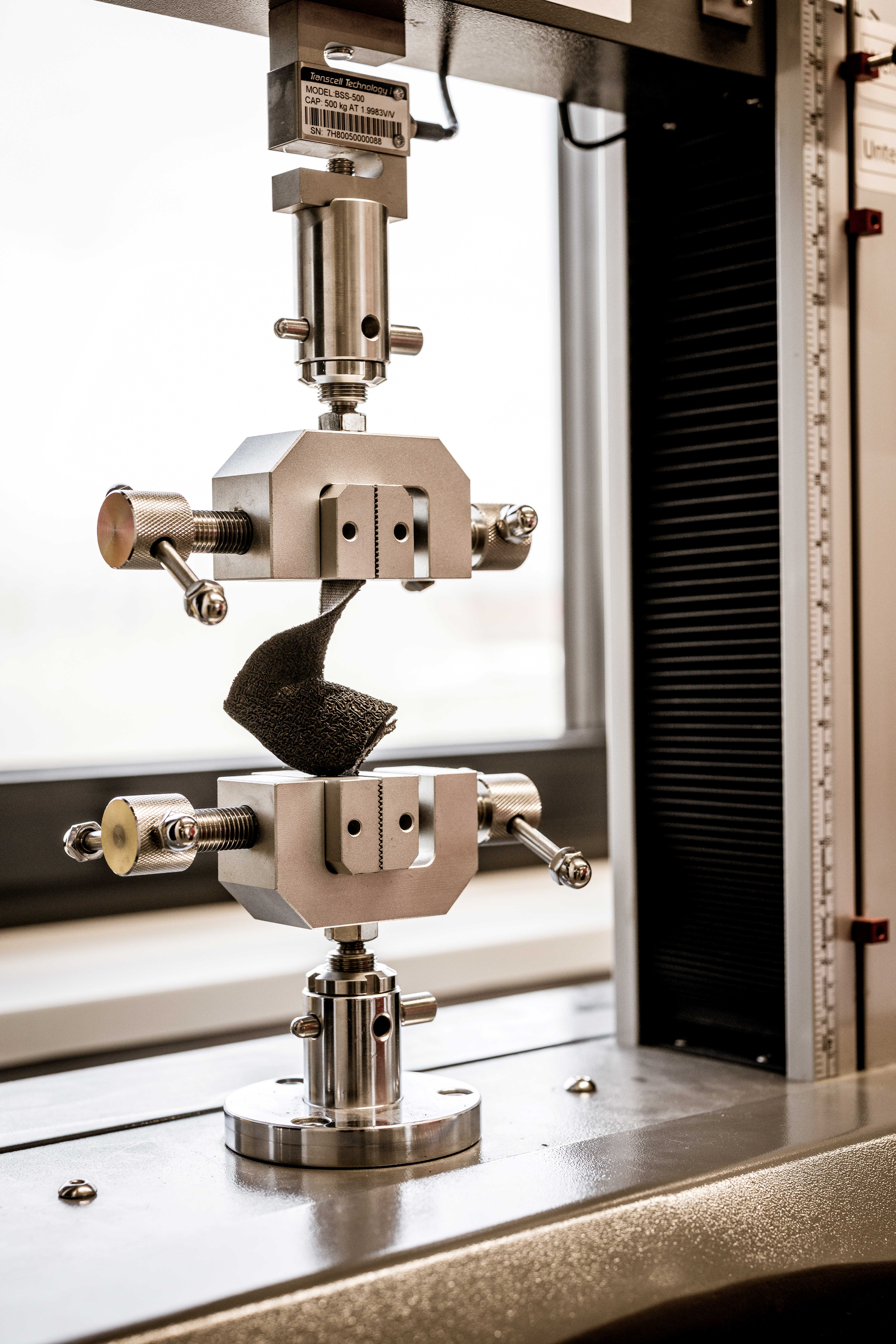
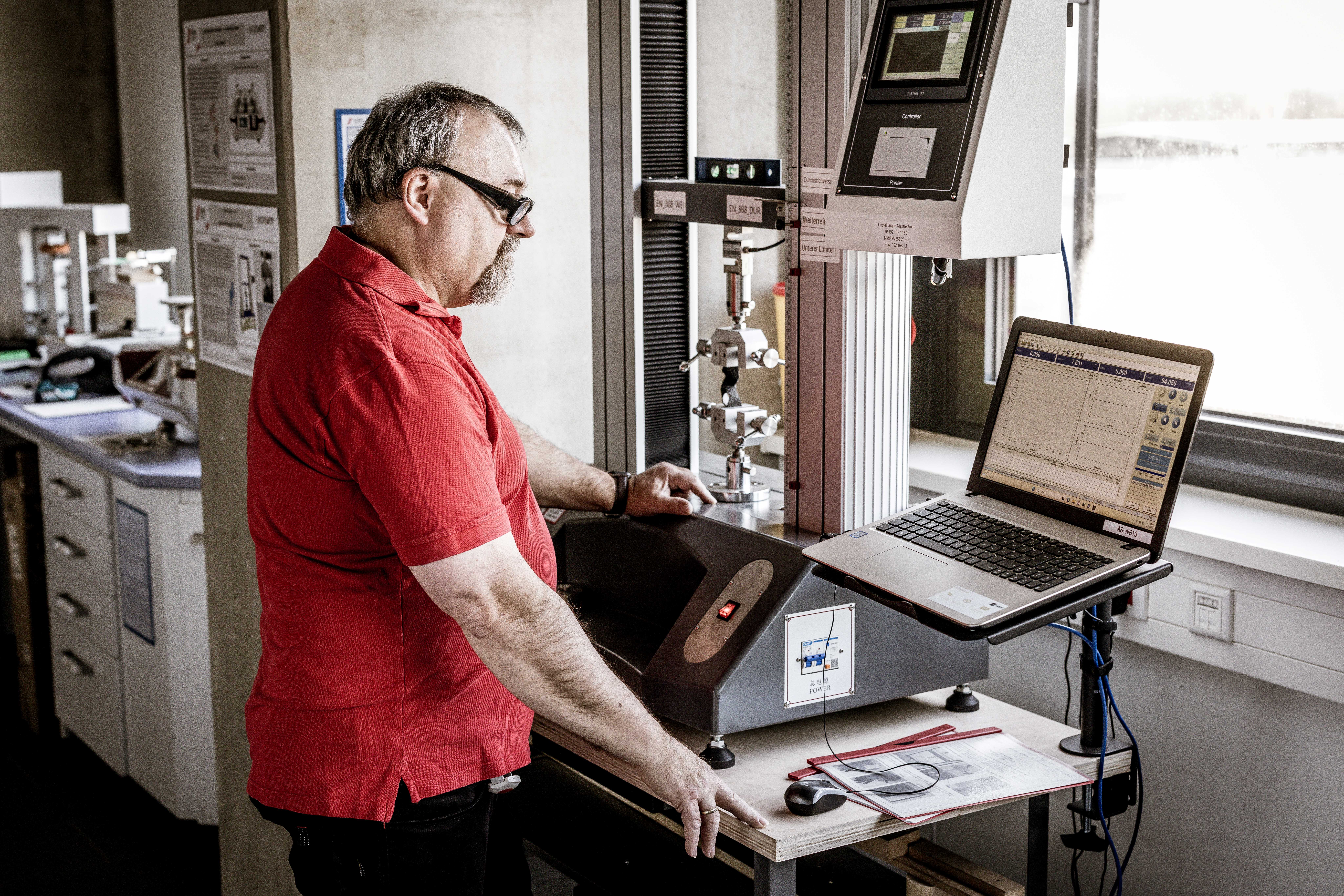
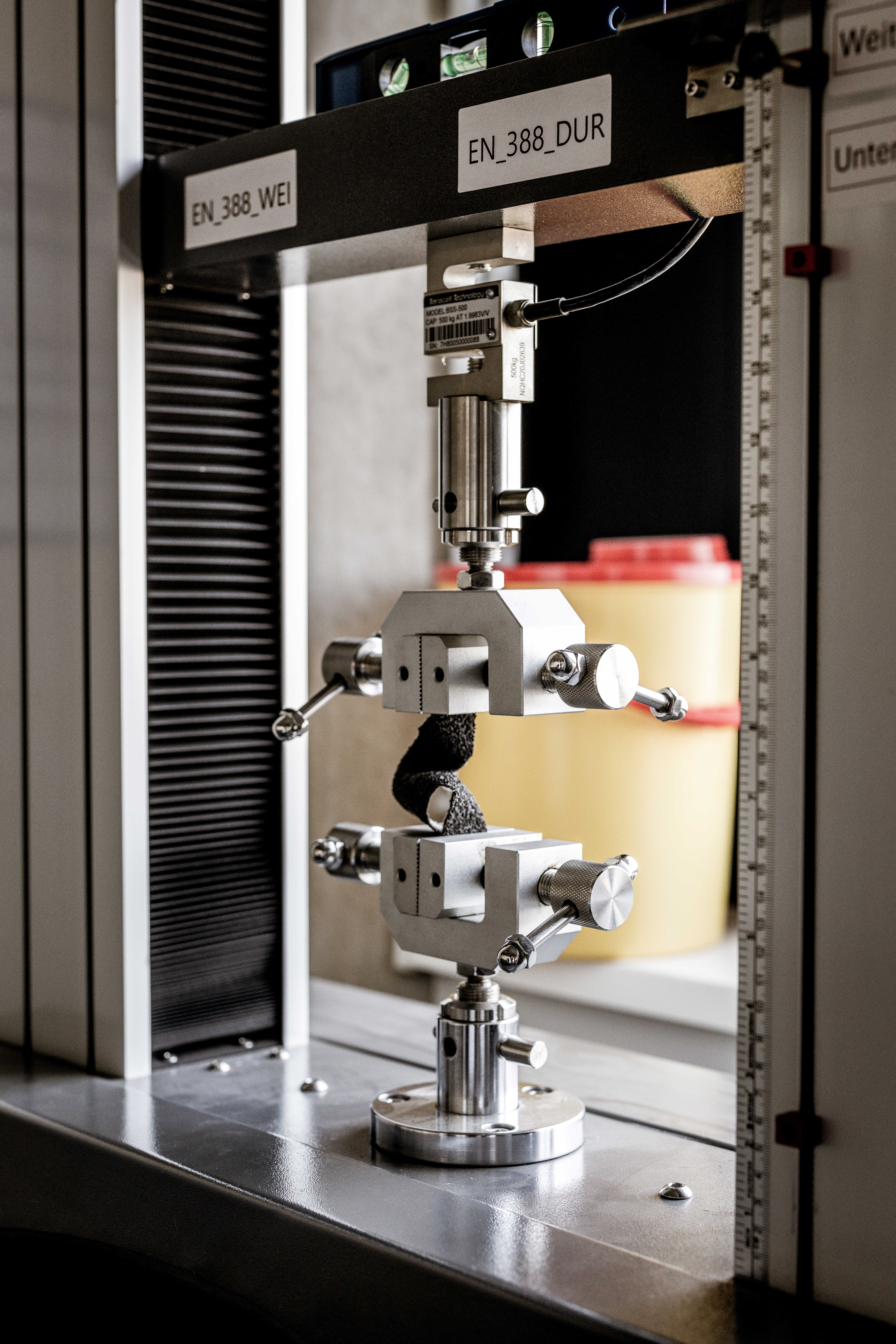
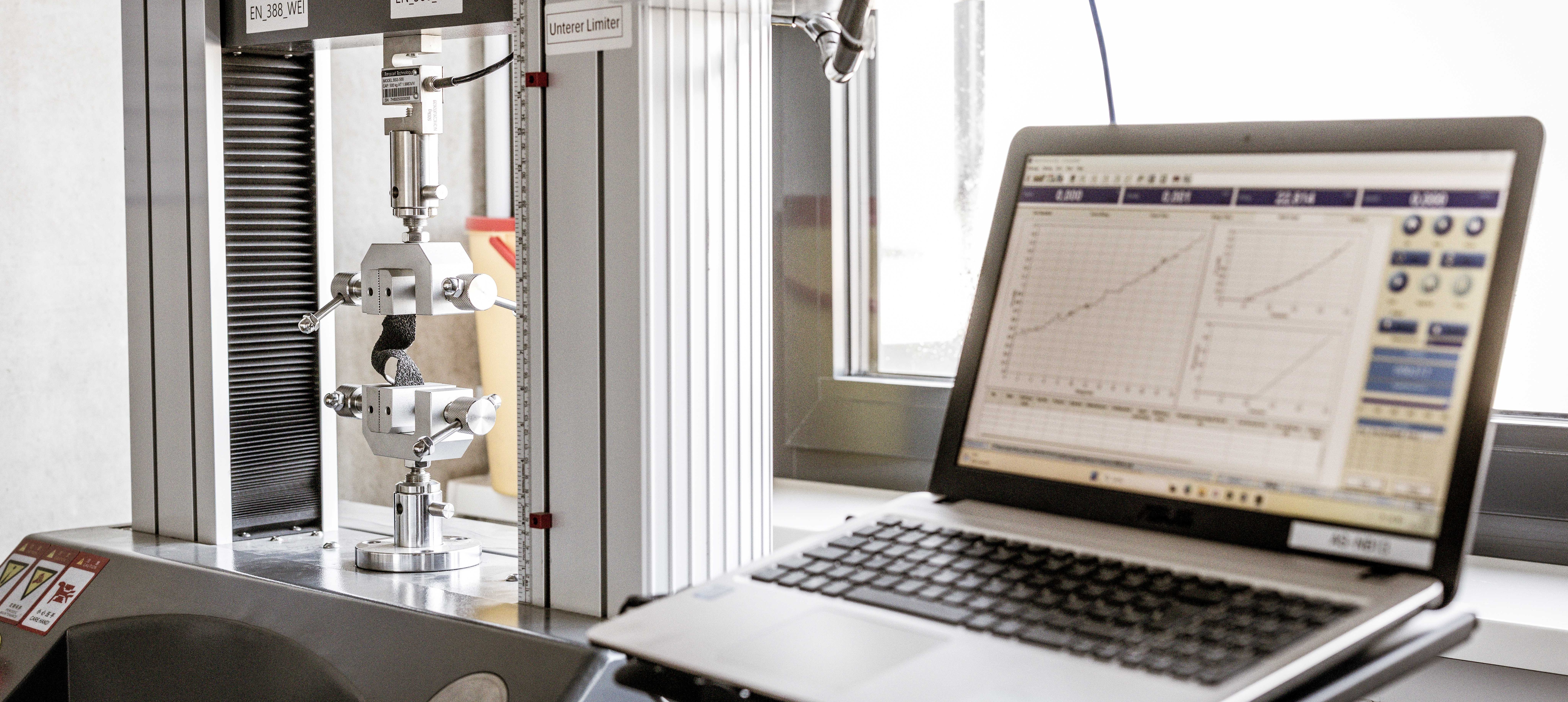
In everyday working environments, protective gloves are exposed to a wide range of mechanical stresses. Sharp edges, pointed objects or existing damage can place additional strain on the material. To assess how resistant a protective glove is under these conditions, EN 388 defines various test methods.Two of these are the tear resistance and puncture resistance tests. At our in-house testing laboratory, the AS Quality Center, we carry out these tests using a universal testing machine under defined conditions. The results provide important data on the mechanical resistance of the glove materials tested.
But what exactly is tested during the tear and puncture resistance tests, how are the tests carried out, and what do the results tell us about a protective glove?
TWO TESTS – TWO DIFFERENT TYPES OF MECHANICAL STRESS
Tear and puncture resistance are among the mechanical performance characteristics assessed under EN 388. Although both tests examine the resistance of the glove material, they simulate different types of mechanical stress.Tear Resistance Test
The tear resistance test determines the force required to continue tearing a glove material that has already been cut. A specially prepared material sample is clamped into our universal testing machine and pulled apart under controlled conditions.
The force required is measured in newtons (N). The greater the force required, the higher the material's resistance to further tearing.
EN 388 distinguishes between four performance levels:
| Performance levels | Tear force |
| 1 | ≥ 10 N |
| 2 | ≥ 25 N |
| 3 | ≥ 50 N |
| 4 | ≥ 75 N |
The test therefore provides information about how the material behaves when it has already been damaged and is subsequently subjected to additional forces.
Puncture Resistance Test
The puncture resistance test focuses on a different type of mechanical stress. It measures the force required to penetrate the glove material using a standardised test probe. The sample is secured in place and the probe is driven against the material at a defined speed.
Here too, the required force is measured in newtons (N). The greater the force required to penetrate the material, the higher the corresponding performance level.
| Performance levels | Tear force |
| 1 | ≥ 20 N |
| 2 | ≥ 60 N |
| 3 | ≥ 100 N |
| 4 | ≥ 150 N |
Important: The puncture resistance test according to EN 388 should not be regarded as a test of protection against hypodermic needles or other very fine, sharp objects. Separate test methods apply to these hazards.
At a glance:
+ Tear resistance: How much force is required to continue tearing material that has already been damaged?
+ Puncture resistance: How much force is required to penetrate the material with a standardised test probe?
+ Result: Both characteristics are rated from performance level 1 to 4 under EN 388.
WHY ARE TEAR AND PUNCTURE RESISTANCE IMPORTANT?
In everyday working environments, mechanical stresses rarely occur in isolation. A glove may, for example, be damaged by a sharp edge and then be subjected to further tensile forces. Similarly, protruding or pointed objects can place considerable stress on individual areas of the material.This is why different mechanical properties are considered when assessing protective gloves. The tear resistance test provides information about how well a material resists the progression of existing damage. The puncture resistance test, on the other hand, evaluates its resistance to penetration by a standardised pointed object.
Together with other tests under EN 388, such as abrasion and cut resistance testing, these results provide a more comprehensive picture of the mechanical properties of a protective glove.
At our AS Quality Center, we can examine these properties under defined and reproducible conditions. This provides us with valuable data for assessing product quality and enables us to use the findings directly in the continuous development of our products.
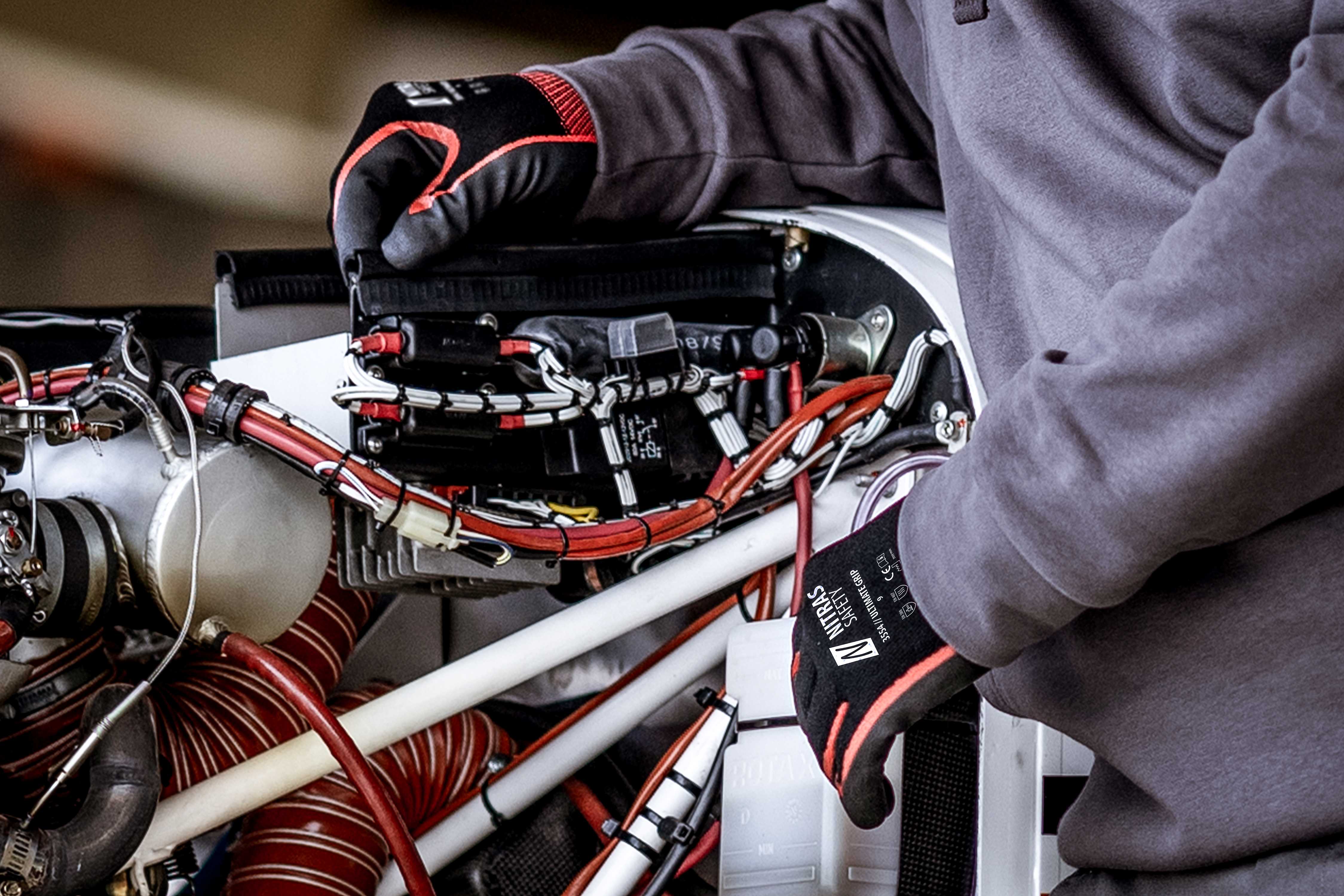
Typical applications where a high level of mechanical resistance can play an important role include:
+ Metalworking
+ Assembly and manufacturing
+ Construction and trades
+ Warehousing and logistics
+ Maintenance and servicing
However, the performance levels required always depend on the specific task and the corresponding risk assessment.